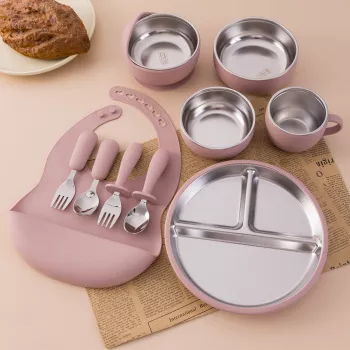
Mealtimes with little ones can be messy, fast-changing, and surprisingly demanding on tableware. A mixed-material feeding set that pairs soft silicone with durable stainless steel helps cover the basics: gentler textures for gums, steadier bowls that resist tipping, and easy-to-clean pieces that can keep up with daily use. This 10-piece set is built for early self-feeding stages, with a suction bowl to reduce spills and a bib designed to catch more than it misses.
A 10-piece combination set is meant to simplify infant and toddler feeding routines by keeping the most-used items coordinated and ready to rotate through the day. Silicone components are often chosen for baby-facing contact points because they feel softer and can help reduce clatter on high-chair trays. Stainless steel pieces add durability and tend to resist staining and lingering odors compared with many plastics.
The suction bowl is designed to help keep food in place during scooping practice, while a silicone bib supports cleaner outfits and faster post-meal cleanup. As with any feeding gear, best results come with adult supervision—especially during the stage when babies are learning to grip utensils and may experiment by banging, tossing, or chewing.
| Component | Material | Primary benefit | Best time to use |
|---|---|---|---|
| Suction bowl | Silicone base + bowl structure (varies by set design) | Helps reduce sliding and tipping | Purees, oatmeal, yogurt, soft solids |
| Bib | Silicone | Catches spills and crumbs | Early solids through toddler stage |
| Utensils (spoon/fork types) | Stainless steel + silicone elements (varies) | Durable, easier grip with softer touchpoints | Self-feeding practice |
| Additional feeding pieces | Mixed materials | Builds a complete mealtime setup | Home meals and travel rotation |
Silicone is flexible and often preferred for baby-facing surfaces due to its softer feel—especially during early stages when gums are sensitive and chewing on utensils is common. Stainless steel brings structure and long-term durability, and it’s widely used for food-contact utensils when properly finished with smooth edges.
Together, these materials can create a set that feels sturdy without being harsh at the table: silicone helps with grip and comfort, while steel helps pieces hold their shape and stand up to frequent washing. This pairing can also support a smoother transition from baby utensils to more “grown-up” cutlery styles, since stainless steel offers a familiar weight and feel while silicone elements maintain a gentler touch where it counts.
For general guidance on food-contact materials and safety considerations, the FDA’s overview of food contact substances is a helpful reference: FDA: Food Contact Substances.
Suction performance depends as much on the surface as it does on the bowl. For the strongest hold, use the bowl on a clean, flat, non-porous surface such as glass, sealed wood, or a smooth plastic high-chair tray. Textured trays, matte finishes, or heavily grained tables can let air leak under the rim and weaken the seal.
When the seal is solid, the bowl helps keep food in place for scooping practice—supporting the learning curve without turning every bite into a sliding chase across the tray.
A silicone bib is all about comfort plus capture. A comfortable neck fit should sit snugly without rubbing, and closures should be adjusted so they don’t pinch or feel restrictive. For many families, the difference-maker is the pocket: a deeper pocket generally catches more dropped food during spoon practice, especially when babies are still learning the timing of “mouth meets utensil.”
For broader feeding safety reminders—especially around handling, storage, and preventing cross-contamination—see: CDC: Food Safety for Infants and Toddlers.
Suction works best on smooth, non-porous, freshly cleaned surfaces. Textured or matte trays can reduce grip, so wiping both the tray and the suction base and pressing firmly to seal usually helps.
Food-grade stainless steel is commonly used for utensils, including baby and toddler cutlery. It’s important to confirm edges are smooth, the size is appropriate for small mouths, and that utensils are used under adult supervision.
Rinse soon after meals, wash with mild soap, and dry thoroughly so residue doesn’t sit in folds or corners. Periodic deeper cleaning should follow the maker’s care instructions, especially for pieces with seams or joints.






Leave a comment