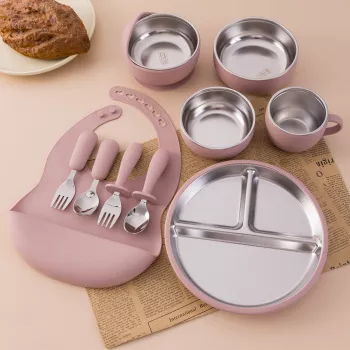
“Silicone stainless steel” usually refers to products that combine two different materials: food-grade silicone and stainless steel. Silicone is a flexible, soft-touch rubber-like material commonly used for grips, handles, sleeves, lids, or outer coatings. Stainless steel is a hard, nonporous metal used for the parts that need strength and long-term durability, like utensil heads, inner cores, or structural components.
This material pairing is popular in kitchen and feeding items because each part does a different job. Stainless steel provides rigidity, helps the item keep its shape, and resists dents and corrosion. Silicone adds comfort and slip resistance, cushions bumps, and can create a tighter seal where needed (such as around lids or bases).
For baby and toddler feeding, the combination can be especially practical. Stainless steel utensil cores or heads can handle repeated use and washing, while silicone handles are gentler on small hands and less likely to slip when food gets messy. Silicone can also reduce clanking noise and add a softer edge where a child might bump a utensil against a bowl or tray.
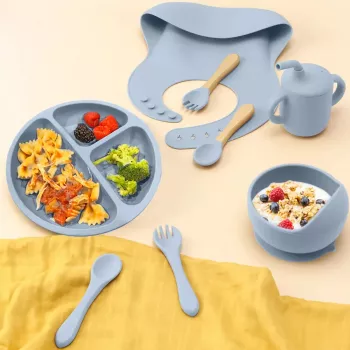
If you’re comparing materials for a mealtime setup, you may also want to see how silicone pieces like bowls, bibs, and utensils work together as a set. This guide walks through common components and what to look for: https://estallos.com/guide-10-piece-baby-feeding-set-suction-bowl-bib-utensils/.
Silicone and stainless steel are generally considered food-safe when made to appropriate standards. For best results, avoid using abrasive scrubbers on silicone parts, and check for any gaps where the silicone meets the metal—those seams should be smooth and secure to help prevent buildup. If the silicone is removable, clean and dry both surfaces thoroughly before reassembling.
Food-grade silicone is often chosen because it’s durable, heat-resistant, and less likely to crack than many plastics. The safest option depends on the specific product quality and whether it meets relevant safety standards.




Leave a comment