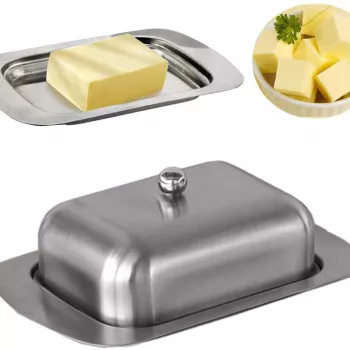
A well-designed butter dish does more than sit on the counter: it helps protect flavor, keeps butter and soft cheeses tidy to serve, and reduces exposure to odors and accidental contact. A stainless steel butter dish with a lid adds a clean, polished look while staying practical for daily use—easy to cover, easy to wipe down, and suitable for both table service and refrigerator storage.
If you’re looking for a simple way to keep breakfast butter ready for toast or to bring sliced cheese to the table without fuss, a covered stainless container is a small upgrade that pays off every day. See the Stainless Steel Butter Dish with Lid – Elegant Butter & Cheese Storage Box for a streamlined option designed for everyday handling.
Butter and mild cheeses are quick to pick up “fridge flavors,” especially when stored near aromatics like onions, garlic, or smoked foods. A lidded container adds a helpful barrier that keeps the surface cleaner and the taste closer to what it should be.
For general food-storage basics and temperature guidance, it helps to follow reputable food-safety resources like the USDA Food Safety and Inspection Service refrigeration guidance and the FDA cold food storage overview.
When butter lives in its paper wrapper, it’s easy for the wrapper to tear, slide, or leave greasy smears on plates and cutting boards. A dedicated dish keeps things contained and makes serving feel more intentional—whether it’s weekday toast or a weekend brunch spread.
For entertaining, a lidded dish also buys you time: set the table early, keep components covered, and uncover when guests are ready to eat.
Many households like room-temperature butter because it spreads easily. At the same time, storage time should be conservative and aligned with food-safety guidance and household conditions—warm kitchens, sunny windows, and heat from nearby appliances can shorten the safe window.
| Item | Best everyday spot | Why the lid helps | Tip |
|---|---|---|---|
| Butter for daily breakfast | Counter for short periods; fridge between uses | Limits dust/odors and keeps surface clean | Keep away from direct sun and heat sources |
| Butter for baking (less frequent use) | Refrigerator | Protects from fridge odors and contact | Let a portion soften before use |
| Soft cheeses (small portions) | Refrigerator | Reduces drying and odor transfer | Store covered; avoid storing next to strong-smelling foods |
| Sliced cheese for serving | Refrigerator until serving | Keeps presentation tidy on the table | Bring out shortly before serving for better texture |
Stainless steel is popular in kitchens because it holds up well and is easy to refresh between uses. A little routine care keeps it looking crisp and helps avoid lingering odors from foods stored inside.
For general background on stainless steel in food-contact uses, the Nickel Institute’s overview of stainless steel applications is a helpful reference.
For a ready-to-use option that suits both countertop serving and refrigerator storage, explore the Stainless Steel Butter Dish with Lid – Elegant Butter & Cheese Storage Box.
Butter can be kept at room temperature for short periods depending on kitchen temperature, household conditions, and food-safety guidance. Keeping it covered and away from heat or direct sunlight helps; for longer storage, move it back to the refrigerator between uses.
Food-grade stainless steel is commonly used for food contact and is non-porous, so it typically won’t affect flavor. Proper cleaning and thorough drying matter most to prevent residual soap or absorbed odors from impacting taste.
Wash with mild soap, rinse well, and dry immediately to prevent spots. For stubborn marks, wipe with a soft cloth and a small amount of diluted vinegar, then rinse and dry to restore a clean finish.






Leave a comment