Energy dips often show up alongside slumped shoulders, a forward head, and shallow breathing. When alignment gets inefficient, the body quietly spends more effort just “holding you up,” and that extra work can feel like mental fog by mid-afternoon. Small posture changes can reduce unnecessary muscular effort, open up breathing mechanics, and support steadier focus—especially during desk work and phone-heavy days. The goal isn’t rigid “perfect posture.” It’s a repeatable way to feel more awake, more comfortable, and less taxed as the day goes on.
Posture affects how much baseline support your muscles must provide. When the head drifts forward and the ribcage collapses, common support areas (neck, upper back, hip flexors) tend to work overtime. That constant low-level effort can contribute to fatigue, even when you haven’t done anything “hard.”
Alignment also shapes breathing mechanics. A collapsed ribcage and a forward head position can encourage shallower breaths that stay high in the chest. Shallow breathing doesn’t automatically mean something is “wrong,” but it often pairs with tension and a harder time sustaining concentration during mentally demanding tasks.
When the pelvis feels stable and the ribcage is stacked over it, the diaphragm and lower ribs can move more freely. Many people notice less neck/shoulder tightness, a steadier voice, and smoother breathing when their torso is organized instead of braced.
Energy is multi-factor—sleep, nutrition, hydration, stress, and workload matter. Posture is simply a fast lever: a quick reset can change how alert and settled your body feels in a minute or two. For more background on why posture matters day to day, see Harvard Health Publishing.
Run this scan before a meeting, after a long scroll session, or anytime your focus starts slipping:
This is a simple loop that pairs alignment with a calmer breathing pattern—use it right before you return to work so the reset carries into the next task.
| Step | Time | What to notice |
|---|---|---|
| Stack posture (feet–pelvis–ribs–head) | 20 sec | Less neck strain; jaw unclenches |
| Slow exhale | 30 sec | Shoulders soften; ribcage drops |
| Quiet nasal inhale | 30 sec | Lower ribs expand; less chest lift |
| Repeat 2–3 rounds | 30–40 sec | Breath feels easier; attention steadier |
Ergonomics won’t make you instantly energized, but it can remove the constant triggers that pull you out of alignment. For practical workstation guidance, see Mayo Clinic’s office ergonomics guide.
| Item | Set it like this | Quick test |
|---|---|---|
| Monitor | Top third near eye level | No chin jutting to read |
| Chair | Feet supported, hips stable | No dangling feet or perched sitting |
| Keyboard/mouse | Close, elbows in | Shoulders stay down at rest |
| Break cadence | 30–60 sec every hour | Less end-of-day neck/low-back fatigue |
For posture and body mechanics basics beyond the desk, NIH MedlinePlus offers simple guidance on posture and lifting principles.
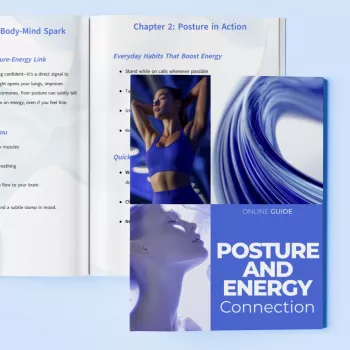
If you want a structured system you can run daily, Posture and Energy Connection – Practical Guide to the posture and energy connection for Daily Vitality, Focus, and Alignment lays out simple checkpoints and repeatable routines that fit desk-heavy schedules and phone-heavy days.
Energy management isn’t only physical—workload and boundaries matter, too. Not Right Now Doesn’t Mean Never: AI-Powered Checklist for How to Use AI to Say No to Extra Work, Protect Your Time, and Set Boundaries supports clearer decisions and fewer “yeses” that drain your day.
And because sleep quality affects how resilient posture and focus feel the next day, Sleepytime Success: The Ultimate Bedtime Routine Checklist for Kids can help families build a more consistent evening rhythm—often a hidden lever for daytime energy.
It can help you feel more energized by reducing fatigue: better alignment often lowers unnecessary muscular effort and makes breathing feel easier. That comfort and smoother breathing can support steadier focus, even though it’s not the same as “creating” physiological energy like sleep and nutrition do.
Many people notice a small, immediate shift after a 60–90 second reset—especially less neck tension and clearer breathing. More durable changes typically take a few weeks of consistent micro-breaks and a workspace setup that doesn’t pull you into a slump.
Stack feet–pelvis–ribs–head, then do one long exhale (about 5 seconds) followed by a quiet nasal inhale into the lower ribs, repeating for 3 cycles. Finish by gently setting the shoulder blades “down and back” and moving your screen/keyboard closer so the reset lasts.





Leave a comment