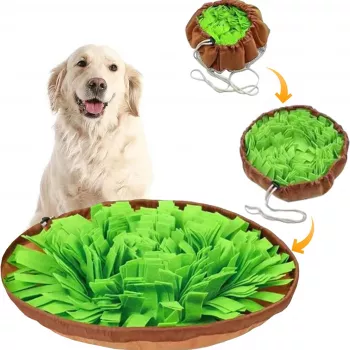
An interactive snuffle mat turns mealtime into a scent-driven game that can calm busy minds, slow fast eaters, and provide a simple way to practice nose work at home. It’s especially useful for rainy days, apartment living, recovery periods, and dogs that need more mental enrichment than a standard bowl or chew.
Most dogs don’t experience the world like humans do. While people lean heavily on sight, dogs process daily life primarily through smell. When a dog searches for food with their nose, it activates a natural foraging loop: sniff, locate, solve, and earn a reward.
For a deeper overview of how to get started with canine scent work, the American Kennel Club’s scent work guide is a helpful reference.
A quality snuffle mat adds structure to enrichment. Instead of simply handing over a treat, you’re setting up a mini “search-and-find” challenge that rewards calm focus.
If you want a dedicated option designed for this style of play, consider the Interactive Dog Snuffle Mat – Nose Work Training & Stress Relief Toy as a simple at-home way to add nose work to daily routines.
Keeping the routine consistent helps your dog understand the game quickly—and helps you avoid accidentally making it too hard too soon.
Place a few larger treats right on top of the fabric so your dog gets fast success. Let them watch you set it up the first few times.
Once your dog is confidently searching, push treats deeper into the folds or switch to smaller kibble. This encourages more sniffing and less “grab-and-go.”
Five to ten minutes is often plenty. Ending while your dog is still engaged helps keep the mat exciting and prevents frustration.
Try offering the mat after a walk, a training session, or playtime. Many dogs shift from high energy to calm concentration when they’re given a sniffing task.
If your dog starts chewing or shredding, calmly redirect, reduce the difficulty, and remove the mat when the game is over. The goal is sniffing—not ripping.
The treat choice and the hide style determine whether a snuffle session feels relaxing or overly intense. When in doubt, start easier than you think you need to.
| Level | How to hide food | Best for | Typical session time |
|---|---|---|---|
| Beginner | Treats placed on top or barely tucked in | Puppies, seniors, first-time users | 3–5 minutes |
| Intermediate | Treats pushed into folds in multiple zones | Most adult dogs | 5–10 minutes |
| Advanced | Small pieces hidden deep, spread widely, mixed with easy decoys | High-energy, experienced sniffers | 8–15 minutes |
For general enrichment ideas that support animal welfare, the RSPCA’s enrichment guidance offers practical context on why mental stimulation matters.
To get started with a purpose-built option, the Interactive Dog Snuffle Mat – Nose Work Training & Stress Relief Toy is an easy add-on to daily feeding and enrichment routines.
Most dogs do well with 5–10 minutes. Beginners often benefit from 3–5 minutes, and it’s best to stop while your dog is still engaged (before frustration or chewing starts).
Sniffing and foraging can promote calm focus and help a dog “come down” after excitement. It’s a supportive tool, but it isn’t a replacement for training plans or veterinary help for severe anxiety.
It can be safe for puppies with supervised use and easy setups that prevent frustration. For heavy chewers or dogs that shred toys, a snuffle mat may not be appropriate—redirect chewing immediately and choose a sturdier enrichment option instead.



Leave a comment