Understanding the Hair Grease & Dryness Paradox: A Practical Guide to Scalp Balance and Lasting Moisture
Some scalps feel oily by day two while the lengths stay rough, frizzy, or brittle. That combo can feel confusing, but it’s often a predictable mix of sebum, dehydration, product buildup, and barrier disruption. The goal is to calm the scalp, cleanse effectively without stripping, and keep water and conditioning agents in the hair fiber where they belong.
Why hair can be greasy and dry at the same time
Greasy roots plus dry ends usually isn’t “bad hair”—it’s a distribution and damage issue.
- Sebum starts at the scalp. It doesn’t automatically travel down to the mid-lengths and ends, especially on textured, curly, long, or high-porosity hair.
- Stripping cleansers can backfire. Harsh shampoos may leave the hair shaft feeling rough while the scalp responds with rebound oiliness.
- Cuticle wear increases water loss. Heat styling, UV exposure, coloring/bleaching, and friction weaken the cuticle, raising frizz and dehydration.
- Buildup can mimic “grease.” Heavy silicones, oils, and dry shampoo can make roots look slick while blocking true hydration and making lengths feel coated.
- Hard water leaves residue. Mineral deposits can dull hair and interfere with conditioning, leading to limp roots and straw-like ends.
Quick self-check: which pattern fits?
Pinpointing the pattern helps you change fewer things—and get better results.
- Oily roots + fluffy/frizzy ends: often dehydration and cuticle damage; conditioning strategy matters more than adding oil.
- Oily roots + coated, dull lengths: likely buildup; clarify strategically and reduce overlapping heavy products.
- Itchy scalp + oily feel: possible irritation, yeast overgrowth, or sensitivity; simplify routine and consider targeted scalp care.
- Greasy only after dry shampoo: residue may be clumping oil and dust; focus on cleansing and application technique.
Common causes and what typically helps
| What you notice |
Most likely cause |
First adjustments to try |
| Roots greasy by day 2, ends frizzy |
Dehydration + cuticle roughness |
Gentle scalp cleanse, conditioner on mid-lengths/ends, reduce heat, add leave-in |
| Roots greasy, lengths dull and heavy |
Buildup (silicones/oils/dry shampoo) |
Clarify 1–2x/month, use lighter conditioner, avoid layering oils over residue |
| Greasy roots with itch or flakes |
Irritation or scalp imbalance |
Fragrance-free basics, avoid scratching, consider anti-dandruff active if persistent |
| Dry ends despite oils |
Water loss; oil sealing without hydration |
Hydrate first (conditioner/leave-in), then use small amount of oil to seal ends only |
Scalp health basics: cleanse the skin, protect the barrier
- Your scalp is skin. Over-scrubbing and very hot water can disrupt the barrier, making oiliness and sensitivity worse.
- Shampoo placement matters. Focus shampoo on the scalp; keep conditioner on mid-lengths and ends to avoid limp roots.
- Use gentle friction. Massage with the pads of your fingers (not nails) for 60–90 seconds to lift oil and residue without abrasion.
- Rinse longer than you think. Leftover cleanser or conditioner is a common cause of both itch and a “still greasy” feel.
A balanced wash routine that targets greasy roots and dry lengths
- Wash cadence: consistency beats extremes. Many people do well washing every 2–4 days, adjusting for sweat, density, and styling.
- Try a double cleanse: the first pass loosens oil/buildup; the second pass cleans the scalp thoroughly with less aggressive rubbing.
- Condition with intention: apply from ears down, then use a wide-tooth comb in the shower for even slip and fewer snapped ends.
- Weekly reset option: if hair feels coated, use a clarifying wash, then follow with a richer conditioner or mask on ends only.
- Towel technique: blot (don’t rub). A microfiber towel or soft T-shirt reduces frizz and split ends.
Moisture vs. oil: how to hydrate without creating buildup
Product buildup and hard water: when “clean” still feels greasy
Heat, friction, and styling habits that worsen the paradox
When flakes, redness, or persistent itch need extra attention
An oily scalp with flakes can be dandruff or seborrheic dermatitis. If symptoms persist, medicated anti-dandruff shampoos may help, and irritation triggers (like fragrance or essential oils) are worth removing temporarily. For reliable guidance, see the American Academy of Dermatology Association overview on dandruff and the Cleveland Clinic resource on seborrheic dermatitis. Everyday routine tips are also covered in AAD hair care basics.
A simple 2-week reset plan
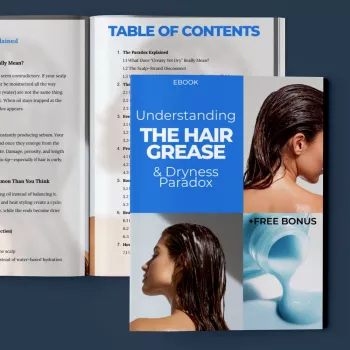
Recommended practical guides (digital downloads)
FAQ
Why are my roots oily but my ends feel like straw?
Oil is produced at the scalp and often doesn’t reach the ends, especially if hair is long, curly, or porous. Meanwhile, damaged or high-porosity ends lose water quickly, so they feel rough even when the scalp looks greasy. Focus shampoo on the scalp, then use conditioner and a leave-in on mid-lengths and ends to keep moisture in the fiber.
How often should hair be washed if it gets greasy quickly?
Many people do well washing every 2–4 days, adjusting for sweat, scalp comfort, and styling habits. Consistent washing with a gentle shampoo and a thorough scalp massage usually works better than extreme over-washing or avoiding washing entirely. Add a clarifying wash occasionally if you use heavy stylers or dry shampoo.
Is putting oil on the scalp good for dryness?
Sometimes, but “dry scalp” (lack of oil) isn’t the same as an irritated or dehydrated scalp. Oils can feel soothing yet also trap residue and make some scalps look greasier or itchier. If itching or flaking persists, prioritize a barrier-friendly routine and consider targeted scalp treatments.
Recommended for you





Leave a comment