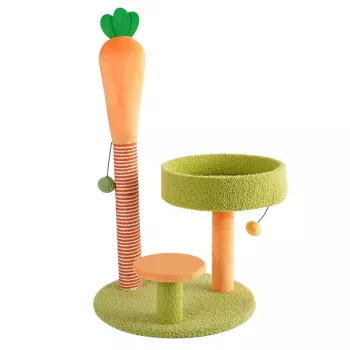
A playful scratch-and-climb piece can do more than look cute: it can protect furniture, give cats a daily outlet for stretching and climbing, and add a dedicated “yes spot” for claws. This carrot-shaped scratcher and climbing frame is designed to combine vertical scratching with perching and movement, helping indoor cats stay busy, confident, and comfortable in shared spaces. For more guidance, see Study1.
Cats scratch to maintain claws, stretch muscles, and communicate through scent and visual marks. Providing a dedicated surface that’s attractive and easy to access can shift those instincts away from upholstery and onto something that’s meant for it. For further reading, see Mushroom Shaped Cat House Small Animal Cave.
For deeper background on why scratching is a normal, necessary behavior (not “misbehavior”), see the guidance from the ASPCA and the Humane Society of the United States.
One of the advantages of a combined scratch-and-climb design is that it can support multiple “daily needs” in a single footprint. The key is matching the setup to your cat’s energy level and comfort with vertical spaces.
If your household includes cats with different confidence levels, adding more than one “approved” scratching area can reduce competition and stress. The Cornell Feline Health Center notes that environment and routine matter for preventing behavior problems; thoughtful resource placement can make a noticeable difference.
The fastest way to get a cat to adopt a new scratcher is to make it convenient and rewarding. Scratching is often about location as much as texture—cats pick places that help them stretch, leave a message, and feel secure.
| Location option | Why it helps | Simple setup tip |
|---|---|---|
| Next to a sofa arm or chair | Replaces a common scratch target | Angle the unit so the scratch surface faces the furniture edge |
| Near a window or balcony door | Adds climbing + viewing time | Pair with a nearby bed or shelf to create a mini vertical zone |
| Bedroom corner | Supports bedtime zoomies and morning stretch | Keep it a few feet from the bed to avoid night-time bumping |
| Hallway or room entrance | Scratching can be a greeting/marking behavior | Place it along the wall line cats already follow |
Cats learn fastest when the new option is easy, predictable, and paired with something they already love (play, treats, or attention). The goal is to make the scratcher part of your cat’s normal “loop,” not a separate training session that feels pressured.
To see current details, visit the Carrot-Shaped Cat Scratcher and Climbing Frame product page.
If you’re also refining the room setup around your cat’s “approved zones” (entryway drop spots, toy storage, fewer cluttered pinch points), Clear & Cozy: Smart Ideas for Tackling Living Room Clutter can help streamline the space so the scratcher is easier to place where it will actually get used.
Many cats prefer a scratcher tall enough to let them extend fully on their hind legs without hunching. Choose a height that matches your cat’s stretch length and prioritize stability; some cats still benefit from a horizontal scratch option nearby.
Place the scratcher right next to the couch first, then use a toy or catnip/scent attractant and reward any scratching immediately. While the new habit forms, temporarily protect the couch with a cover or deterrent surface so the scratcher becomes the easiest, most satisfying choice.
Yes—safe climbing options can add exercise, confidence, and “vertical territory,” which may reduce boredom and stress. Use stable furniture, keep landing areas clear, and add multiple resources in multi-cat homes to minimize crowding.





Leave a comment