A clear, shared set of family rules helps kids and pets feel safe, reduces fear-based reactions, and builds respectful habits quickly. The goal isn’t to keep everyone “perfect”—it’s to create predictable routines: where pets can rest, how kids can say hello, and what to do the moment an animal needs space. Use the steps below for first introductions, daily life, and playtime, then keep everyone consistent with a printable checklist.
Many bites and scratches don’t happen during “bad behavior”—they happen during normal family moments: hugging, grabbing a toy, interrupting sleep, or leaning over a food bowl. Kids move fast and unpredictably, and they often miss early stress signals. Pets may feel trapped, startled, or protective, especially in new environments or when routines change.
Simple rules protect both sides: fewer injuries for kids and fewer scary experiences for pets. Consistency also matters across caregivers (parents, grandparents, babysitters, older siblings). Mixed messages—like “hug him, he loves it” one day and “don’t touch him” the next—make it harder for a pet to trust what’s coming.
For additional guidance from veterinary and pediatric experts, review the American Veterinary Medical Association’s dog bite prevention tips and the American Academy of Pediatrics safety guidance for families with dogs.
Good introductions are mostly “setup.” When the environment is calm and choices are built in, pets don’t feel cornered and kids have clear boundaries.
| Area | What to do | Why it helps |
|---|---|---|
| Safe zone | Gate off a calm area with water and a bed | Gives the pet an escape and lowers stress |
| Food & chews | Feed pets away from kids; pick up chews when kids are nearby | Prevents guarding and conflict |
| Supervision plan | Assign one adult to the kid and one to the pet when possible | Reduces missed warning signs |
| Kid tools | Practice “gentle touch,” “hands off,” and “freeze” | Builds predictable behavior for the pet |
Think “tiny wins,” not long hangouts. The first goal is neutral-to-positive exposure where the pet can observe and the child can practice calm behavior.
If the pet disengages—turns away, walks off, or hides—treat that as good communication. The “win” is that the pet felt safe enough to choose space instead of escalating.
Kids follow rules best when they’re short, concrete, and repeated the same way every time. Post these rules where play happens.
| Pet behavior | What kids do | What adults do |
|---|---|---|
| Pet walks away or hides | Don’t follow; hands to self | Block access, guide child to another activity |
| Stiff body / tense posture | Freeze and step back | Increase distance, redirect pet with treats/toy |
| Growl, hiss, swat, snap | Move behind adult | Separate, check for triggers, consider professional help |
For everyday hygiene reminders (especially with toddlers), the CDC Healthy Pets, Healthy People hub is a helpful reference for handwashing and safe pet contact habits.
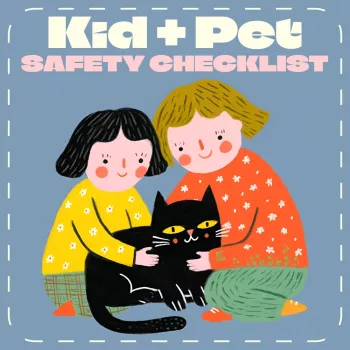
If you want an easy, ready-to-print version to keep everyone consistent, see: Kid + Pet Safety Checklist (digital download). For families juggling multiple routines (including newborn schedules), a second quick-reference can help reduce household chaos: Printable checklist for new parent routines.
Any age can be safe with close, hands-on supervision and clear boundaries. Younger children need constant adult guidance and simple rules (ask first, gentle touch, and give space). Readiness depends more on the child’s ability to follow directions than on age alone.
Have the child freeze, keep hands to self, step back, and move behind an adult. The adult should calmly separate pet and child and remove any trigger (food, toys, crowding) without punishing the pet for warning.
Feed pets separately, pick up high-value chews when kids are nearby, and teach kids never to approach bowls or grab toys from a pet. Adults can use “trade-ups” (offer a treat in exchange for an item) and manage access with gates; if guarding escalates, consult a veterinarian or qualified behavior professional.





Leave a comment