
Bullying prevention starts long before a hurtful comment lands on the playground or a group chat turns cruel. Parents can reduce risk by building protective factors at home: steady connection, confidence skills, healthy boundaries, and clear plans for what to do when something feels wrong. This guide breaks prevention into practical routines, conversation starters, and school-ready steps that support kids without making them feel blamed or singled out.
Bullying is more than a bad moment—it’s a pattern. Most definitions include repeated behavior, an imbalance of power (popularity, physical size, social status, digital access), and an intent to harm, embarrass, or control. A single mean comment can be serious, but bullying usually shows up as a repeated dynamic that makes a child feel trapped.
Conflict is different: two kids disagreeing with relatively equal power. Conflict still needs adult coaching and repair, but it isn’t automatically bullying. Clear language matters because it helps kids report accurately and helps adults respond consistently at home and at school. For widely used definitions, see StopBullying.gov and the American Psychological Association.
Common forms include verbal bullying (teasing, threats), social/relational bullying (exclusion, rumors), physical bullying (hitting, damaging belongings), and cyberbullying (messages, posts, images).
Many kids don’t report bullying right away—especially if they fear losing phone access, being labeled a “snitch,” or disappointing adults. Watch for clusters of changes rather than any single sign.
| Situation | What to say (calm, supportive) | Next step (practical action) |
|---|---|---|
| Child hints at a problem but won’t share details | “Something feels off. You don’t have to handle it alone. Would you rather talk now or after dinner?” | Offer two low-pressure times to talk; observe patterns; message teacher/counselor with a neutral request to monitor. |
| Child reports repeated teasing or exclusion | “That’s not your fault. Thank you for telling me. Let’s name what’s happening and decide our next step.” | Document dates/locations; role-play responses; ask school about supervision and peer dynamics. |
| Cyberbullying screenshots or cruel group chat | “You did the right thing saving this. We’ll handle it together and keep you safe.” | Save evidence; block/report; tighten privacy settings; notify school if classmates involved; consider platform reporting. |
| Child feels ashamed or “weak” | “Being targeted says something about the other person’s choices, not your worth. Your job is to get support.” | Build a support map (2–3 trusted adults); schedule check-ins; practice assertive body language and “walk away + report” plan. |
Prevention works best when it feels like everyday family life—not a “bullying talk” that makes kids feel singled out. Small routines create a steady feedback loop: kids share sooner, and parents can spot patterns earlier.
For additional prevention guidance, the CDC’s bullying prevention resources outline strategies that reduce risk at multiple levels (family, school, and community).
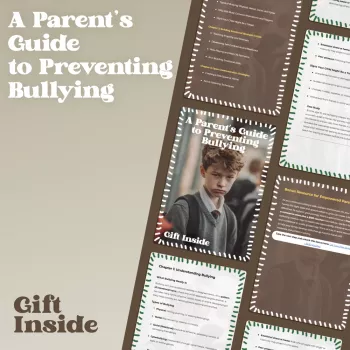
Some families want a step-by-step approach—conversation prompts, confidence practice, documentation help, and clear school communication templates. A Parent’s Guide to Preventing Bullying (Practical eBook) organizes prevention into doable routines and responses, especially useful during transitions like a new school year, changing friendships, or expanding online access.
To support calmer daily rhythms that make check-ins easier, some parents also like keeping home routines simple and predictable—resources like Clear & Cozy: Smart Ideas for Tackling Living Room Clutter can help create a space where kids are more likely to decompress and talk. For families juggling younger siblings and busy evenings, Midnight Diaper Duty Made Easy – Printable New Parent Checklist can reduce overnight chaos so daytime conversations don’t get squeezed out.
Stay calm, thank your child for telling you, and clearly say it’s not their fault. Ask for specific details (who, what, where, how often) and end with one shared next step so they feel supported right away.
Often it’s safer to start with the school to reduce escalation and protect privacy for all kids involved. If direct contact is considered, keep it brief, factual, and focused on safety rather than accusations.
Set clear online rules, teach privacy settings and evidence-saving, and schedule regular, supportive check-ins. When possible, keep devices out of bedrooms at night and make it safe for kids to report early without fearing they’ll lose access.





Leave a comment