Posture isn’t just “standing up straight.” It’s how your joints stack, how muscles share load, and how breathing supports the spine across hours of sitting, standing, walking, and sleeping. Small alignment habits can quietly amplify strain—especially in the neck, shoulders, lower back, hips, and knees—while simple corrections can reduce daily irritation and help the body move with less effort. Below are common posture patterns, how they relate to pain and body-shape changes over time, and practical adjustments that work in real schedules.
Posture is a moving target. A rigid “perfect posture” matters less than how often you change positions and how evenly your body distributes load. When joints drift out of a stacked alignment, muscles have to work overtime to stabilize. That extra effort often shows up as tightness, trigger points, headaches, or a tired, heavy feeling by the end of the day.
Another frustration: pain isn’t always at the source. Neck strain can be driven by ribcage position and breathing mechanics; knee discomfort can trace back to hip control; low-back ache may relate to pelvic tilt and how you manage pressure when you breathe. A helpful goal is “comfortable, supported, frequently varied” rather than constant bracing.
Most day-to-day posture issues fall into a few repeatable patterns. Recognizing your “default” makes it easier to choose the right reset instead of randomly stretching whatever feels tight.
| Pattern | Common stress points | Fast reset to try (30–60 seconds) |
|---|---|---|
| Forward head/rounded shoulders | Neck, upper traps, front shoulder | Chin gently back, exhale fully, reach crown up; slide shoulder blades down/back without arching ribs |
| Rib flare/low-back arch | Low back, hip flexors | Exhale to soften ribs down; slight pelvic tuck; breathe low into sides/back of ribcage |
| Slumped sitting | Mid-back, low-back fatigue | Sit on sit-bones; feet flat; small towel behind low back; micro-break every 30 minutes |
| Weight on one hip | Hip/SI, knee | Stand “tripod foot” (heel, big toe, little toe); soften knees; bring pelvis level; alternate stance frequently |
| Screen crane (neck extended) | Base of skull, jaw, upper back | Raise screen; relax jaw; eyes level; pause and do 3 slow nasal breaths with shoulders heavy |
Phone and laptop angles encourage head-forward posture and a rounded upper back. A screen-height change often helps more than trying to “hold” your neck back all day. The NIOSH computer workstation guidance is a practical reference for positioning screens, chairs, and input devices.
Every 30–60 minutes, take 30–60 seconds: stand, walk, reach overhead, or do a gentle rotation. Variety is what reduces overload. For general back-pain context and when symptoms warrant attention, the NINDS low back pain fact sheet is a useful overview.
Get the environment working for you: screen near eye level, elbows close to 90 degrees, feet supported, mouse close (so the shoulder doesn’t hike), and a chair setup that allows hips slightly above knees if that’s comfortable. If mouse or hand tension is part of your day, a targeted resource like Hands at Ease: Stop Mouse Pain Fast can help you dial in small changes that add up.
Seek professional evaluation for numbness or tingling, weakness, radiating pain, unexplained weight loss, fever, night pain that doesn’t change with position, or symptoms after a fall/accident. For recurring pain that improves briefly with stretching but returns, consider an assessment with a physical therapist or qualified clinician to identify movement and strength drivers. General red flags and symptom guidance are also summarized by Mayo Clinic’s back pain overview.
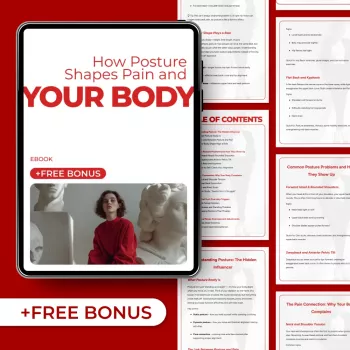
For step-by-step posture checks, habit tracking, and straightforward corrections you can do at home or at a desk, a structured guide can make changes easier to stick with. How Posture Shapes Pain and Your Body – Practical Ebook Guide focuses on alignment basics, everyday habit adjustments, and simple, repeatable drills that don’t require a gym.
Yes—habitual joint positions and muscle use can influence appearance (like shoulders rounding, ribcage lifting, or pelvic tilt). Changes are usually gradual and respond best to movement variety, strength work, and reducing long, sustained positions.
Some people feel improvement within days from better setup and frequent micro-breaks. Longer-lasting changes in mobility and strength typically take a few weeks of consistent practice, especially when you reduce the time spent in your most irritating positions.
Not always—rigid upright sitting can increase fatigue and make you slump harder later. A better approach is supported, adjustable sitting with comfortable breathing, neutral stacking, and regular movement breaks.






Leave a comment