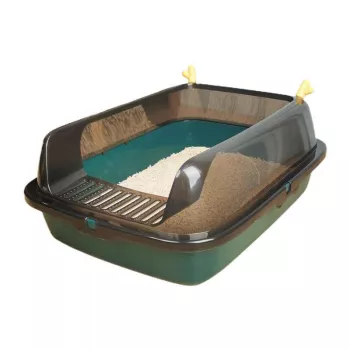
A roomy litter box can reduce accidents, scattered litter, and stress—especially for larger cats or multi-cat homes. An oversized, semi-enclosed, spatter-proof design focuses on keeping mess contained while staying easy to access and clean, with a detachable antler-style detail that doubles as a practical handling point. For more guidance, see Providing Outdoor Litter Boxes.
Standard boxes can feel tight for bigger cats or cats that like to dig with enthusiasm. When a box is cramped, some cats begin aiming at edges, stepping into waste, or avoiding the box altogether. An oversized footprint offers more interior room for turning, circling, and digging—behaviors that help cats feel secure and can reduce out-of-box elimination. For further reading, see Joolz – Hub² Compact Stroller Lightweight, Forest Green.
Semi-enclosed designs strike a middle ground: tall walls help block kicked litter and spray, while the open top (or larger opening) improves airflow compared with fully covered boxes. For cats that urinate high or back up to the edge, a higher spatter guard is often the difference between “daily mop” and “easy wipe.” The tradeoff is space: oversized boxes take planning so they don’t crowd doorways or pinch walking paths.
The most frustrating litter box messes usually happen during two moments: vigorous digging and high-angle urination. Side and back walls act like a shield, catching loose litter and splash so it stays inside the box instead of on nearby floors and baseboards. That matters for odor control, too—when urine reaches porous surfaces (grout, wood trim, some laminates), lingering smell can build up even after you scoop.
A semi-enclosed structure can also offer a bit of privacy without fully trapping odors the way some covered boxes can. Many cats appreciate the sheltered feel, while owners appreciate fewer granules migrating across the room and into bedding or carpet.
| Common problem | Likely cause | Design feature that helps | Practical tip |
|---|---|---|---|
| Litter scattered outside the box | High-energy digging or exiting quickly | Raised spatter/splash guard walls | Place a litter mat at the exit and keep litter depth moderate |
| Urine splash on the floor/wall | High pee posture or backing up to the edge | Semi-enclosed tall sides/back | Rotate the box so the highest wall faces the usual aiming direction |
| Clumps stuck to corners | Moisture buildup and tight corners | Roomier interior and easier access for scooping | Scoop daily and use a scoop with a flat edge for corners |
| Odor lingering nearby | Infrequent scooping or saturated litter | Contained area reduces spread, still ventilated | Fully replace litter on a schedule based on litter type and cat count |
For deeper guidance on preventing common litter box issues, these veterinary resources are helpful: Cornell Feline Health Center, UC Davis School of Veterinary Medicine, and VCA Hospitals.
Big litter boxes are great—until it’s time to move them. A detachable antler-style detail can make repositioning easier by giving your hands a more confident place to grip (especially when you’re emptying or carrying the box to wash it). When the design separates, it can also be easier to reach edges where residue likes to hide—around seams, high splash areas, or the back corners cats tend to favor.
If your cat is the type to chew or paw at attachments, consider detaching the piece during the first week and reintroducing it once the box feels “normal.” The goal is comfort and consistency: a litter box that’s easy to maintain is one you’re more likely to keep impeccably clean.
When choosing a size, look for enough interior room for your cat to enter, turn around comfortably, and dig without constantly bumping walls. Cats that feel cramped may try to “fit” by perching on edges, which increases the chance of misses, splash-out, and litter on paws.
In multi-cat homes, spacing matters as much as size. Spread litter boxes across quiet areas so one cat can’t easily block access. Avoid placing a box right next to loud appliances or in a dead-end spot where a cat feels trapped. If you want to tuck the box into a corner, leave enough clearance for scooping and for your cat to enter and exit without being squeezed.
Oversized Spatter-Proof Semi-Enclosed Cat Toilet with Detachable Antler
To keep the surrounding area tidy and easy to maintain, pairing your litter station with smart home organization can also help: Clear & Cozy: Smart Ideas for Tackling Living Room Clutter – A Practical Guide to Decluttering & Organizing Your Space
Raised sides help stop litter from being kicked out during digging, which reduces scatter around the box. A litter mat still makes a big difference for tracking, and using the right litter depth (not too deep) can further cut down on granules leaving the box.
Yes—more space allows a large cat to enter, turn, and dig comfortably, which can reduce stress and improve litter box consistency. Cramped boxes can contribute to edge peeing, awkward posture, or avoidance over time.
Scoop daily, wipe the inner walls weekly, and do a full empty-and-wash about monthly (or sooner if odor builds). The exact schedule depends on how many cats use the box and the type of litter you use.





Leave a comment