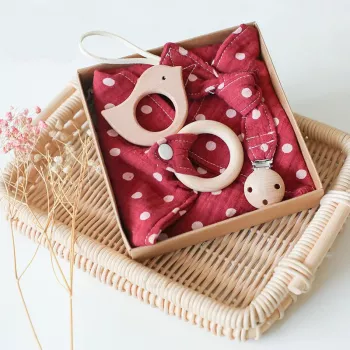
A practical newborn-to-infant essentials bundle can simplify everyday routines while keeping comfort and safety in focus. This 3-piece set combines a wooden teether, a pacifier clip, a bandana bib, and a soft cotton burp bib to support feeding, drooling, and soothing throughout the day. Whether you’re stocking a nursery, refreshing the diaper bag, or building a small “grab-and-go” kit for grandparents’ house, these are the kinds of basics that get used on repeat.
This set is designed around the most common little moments: sore gums, dropped pacifiers, teething drool, and post-feeding burps. Each piece has a clear everyday job, which makes it easier to pack light without feeling unprepared.
| Item | Primary use | When it helps most |
|---|---|---|
| Wooden teether | Soothing gums and sensory exploration | Teething and fussy moments |
| Pacifier clip | Helps prevent drops and loss | On walks, car rides, errands |
| Bandana bib | Catches drool and small dribbles | Teething, daytime play |
| Cotton burp bib | Protects clothing during burping | After bottles or nursing |
The best baby items aren’t complicated—they simply remove friction from routines you do many times a day. Pairing a soothing tool (the teether) with practical mess-control (two types of bibs) can make days feel more manageable, especially during growth spurts and teething phases.
If you’re building a small essentials stash, this type of set is also easy to duplicate—one at home and one in the diaper bag—so you’re not constantly moving items back and forth.
Many babies enjoy the feel of a firm teether when gums get tender. Wood can provide a stable surface to chew, plus a natural texture that offers sensory variety. Teething timelines can vary widely, so it helps to have a soothing option ready before fussiness peaks. For general guidance on teething and comfort measures, the American Academy of Pediatrics teething resource is a helpful reference.
A simple routine that often helps: keep one teether in use and another clean and dry as a backup. That way, you’re not stuck rinsing and waiting while baby is already upset.
Pacifier clips are convenient, but safety habits matter. Clips should be used when baby is awake and supervised, and removed for sleep. For broader guidance related to safe sleep environments and infant product considerations, review the CPSC Safe Sleep information.
As a day-to-day practice, do a quick “tug test” before heading out the door: confirm the clip is secure, the strap is intact, and nothing feels loose or worn.
Having both a bandana bib and a burp bib may seem redundant until you hit a week of nonstop drool or frequent spit-up. They solve different problems, and using the right one at the right moment can keep baby drier and more comfortable.
Frequent use calls for simple care routines. Fabric bibs often do best with gentle washing, and teethers should be cleaned in a way that protects the material. For general cleaning and hygiene principles, the CDC guidance on cleaning offers a solid baseline.
For a simple, useful pairing, consider adding a planning resource for nighttime routines: Midnight Diaper Duty Made Easy – Printable New Parent Checklist.
To see the full set details, visit: 3pc Baby Wooden Teether Set – Pacifier Clip, Bandana Bib, and Cotton Burp Bib.
Wooden teethers can be safe when they’re made for infants, have smooth surfaces, and are used under close supervision. Check regularly for cracks, splinters, or rough spots, and clean it according to the manufacturer’s instructions.
No—pacifier clips should be removed for naps and overnight sleep. Use them only when baby is awake and supervised, and attach the clip to clothing (not blankets or straps).
Change bibs whenever they become damp to help reduce skin irritation and keep baby comfortable. Having multiple bibs ready makes quick swaps easier, and washing with a gentle detergent can help for sensitive skin.



Leave a comment