Baby play at home can be simple, low-mess, and deeply developmental. With a few safe household items and a flexible routine, caregivers can support sensory exploration, core strength, grasping, reaching, and early communication—without needing a room full of toys. The ideas below are designed for quick setup, small spaces, and easy cleanup while keeping safety and baby’s cues front and center.
Before any activity, set up a clear, supervised play zone. A firm surface for floor play (a mat or blanket on the floor) helps baby move freely. Remove cords, small objects, and unstable furniture within reach, and keep hot drinks well out of the area.
Let baby lead the “how long” and “how hard.” Short bursts are normal; simplify or stop when you see fatigue signals like turning away, fussing, stiffening, or a glazed look. Materials should be age-appropriate: avoid anything small enough to fit through a toilet paper roll, and keep loose beads, coins, button batteries, magnets, and deflated balloons far away.
For sensory play, edible or non-toxic materials are the safest default, and it helps to wash hands and surfaces after messy moments. Rotate positioning through the day—tummy time, back play, and supported sitting—to balance muscle groups. Containers (swings, bouncers, seats) can be useful briefly, but frequent floor time is what fuels rolling, crawling, and coordination. For broader guidance on infant safety and development, see resources from the American Academy of Pediatrics.
Sensory play doesn’t need a big setup. A few safe textures, sounds, and sights offer rich learning—especially when you pause and let baby explore at their pace.
Gross motor skills grow through small, repeated chances to push, reach, pivot, and shift weight. Keep sets short, upbeat, and easy to stop.
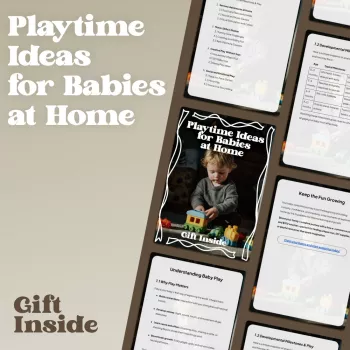
Use this as a menu, not a schedule. Rotate 2–3 activities per day based on mood, sleep, and feeding. If baby is pre-rolling or pre-sitting, prioritize midline play, head control, and brief tummy-time sets. For mobile babies, add safe obstacle play and simple “find it” games to support problem-solving. Many babies do best with 3–10 minutes per activity; repetition across days is where skills consolidate. If you’d like a ready-to-pick library, Playtime Ideas for Babies at Home (Digital Baby Activity eBook) organizes options by skill and setup time.
| Stage | Sensory idea | Motor skill focus | What you need | Quick safety note |
|---|---|---|---|---|
| 0–3 months | High-contrast tracking | Head control, visual attention | Black/white card or toy | Keep objects 8–12 inches from face |
| 3–6 months | Texture squares | Reaching, grasping, hands-to-midline | Washcloths, soft scarf | Avoid loose fibers; supervise closely |
| 6–9 months | Sponge-and-cup water tray | Sitting balance, bilateral hand use | Shallow tray, sponge, cup | Never leave unattended near water |
| 9–12+ months | Cushion obstacle lane | Crawling, climbing, coordination | Couch cushions, safe floor space | Spot closely; pad edges and corners |
If nighttime care routines feel like they eat up the day, a simple plan can help. Midnight Diaper Duty Made Easy – Printable New Parent Checklist is a quick way to streamline supplies and steps so you can get back to rest (and daytime play) faster.
Some days, choosing an activity is harder than doing it. A curated set of ideas reduces decision fatigue and keeps skill-building consistent across the week. Look for resources with clear setup steps, household-item swaps, and activities that scale from early tummy time to early toddler movement—without pushing rigid milestone pressure. For developmental reference points and when to seek guidance, the CDC developmental milestones are a helpful baseline.
Many babies do best with short sessions—often 3–10 minutes per activity—repeated a few times a day. Watch baby’s cues and end on a calm note when attention fades or fussiness starts.
Try texture squares, supervised crinkle paper, high-contrast cards, mirror play, sealed sound shakers, or painter’s tape pull-offs. These options keep cleanup minimal while still offering rich sensory input.
Start with tiny sets and friendlier positions like chest-to-chest, across your lap, or with a rolled towel under the chest. Use an engaging object at eye level, and gradually increase time as baby becomes more comfortable.





Leave a comment