Nature’s Shield: Stylish Garden Privacy with Plants and Natural Screens
A private garden can feel open, bright, and welcoming without relying on harsh fencing or bulky panels. With the right mix of living plants, layered screening, and a simple planning process (including smart layout tools), it’s possible to block unwanted views, reduce noise, and create outdoor “rooms” that look intentional in every season.
Start with a simple privacy plan
- Map sightlines first: identify where views come from (neighbor windows, second-story decks, street corners) and mark “must-block” angles.
- Set the privacy goal by zone: a dining area needs eye-level screening; a hot tub needs higher coverage; a pathway may only need soft visual separation.
- Choose the style direction: lush and natural (mixed hedging), modern (grasses + trellis lines), or cottage (climbers + layered shrubs).
- Check constraints early: sun exposure, wind, drainage, irrigation access, pet traffic, and local rules (setbacks, hedge height limits).
- Decide how fast the screen must work: immediate coverage (trellis + climbers or large containers) vs. long-term (hedge planting).
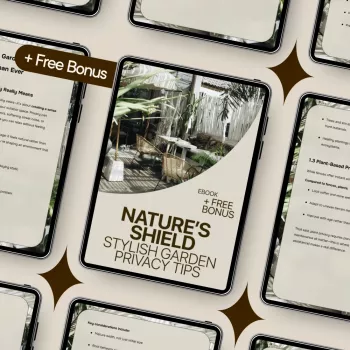
For inspiration and a step-by-step approach that keeps the look cohesive, see Nature’s Shield: Stylish Garden Privacy Tips | Garden Privacy with Plants Ideas eBook | Natural Screens, Smart AI Planning & Outdoor Design Guide.
Living screens that look good year-round
- Evergreen structure: use narrow evergreens for consistent coverage where winter privacy matters; keep them away from fences to allow airflow and maintenance access.
- Layering for density: combine a taller backbone (evergreen hedge) with mid-layer shrubs and a front layer of ornamental grasses or perennials to close gaps at different heights.
- Seasonal interest: mix foliage textures and bloom times so the privacy planting looks designed rather than purely functional.
- Wildlife-friendly options: incorporate native shrubs where possible for birds and pollinators, while avoiding invasive species in the region.
- Edge control: define planting beds with crisp borders or gravel strips to keep a “stylish” look as plants mature.
If you’re choosing hedge plants, the Royal Horticultural Society (RHS) hedges guide is a helpful reference for hedge types and care basics.
Plant ideas by space, speed, and height
- Tight spaces: choose columnar shrubs, trained espaliers, or trellis systems to gain height without eating the patio footprint.
- Fast visual coverage: use trellis + climbers, tall ornamental grasses, or mixed shrub groupings; plan for follow-up pruning so fast growth stays tidy.
- Noise buffering: thicker, multi-layer plantings work better than a single row; add broadleaf shrubs to reduce high-frequency sound and create a fuller barrier.
- Windy yards: stagger plantings and include flexible species that won’t snap; use temporary windbreak mesh while new plants establish.
- Corners and gaps: target the “triangle view” at fence corners with a tall focal plant (or a container tree) plus lower mass planting to seal sightlines.
Quick guide to plant-based privacy screens
| Privacy solution |
Best for |
Typical height potential |
Time to meaningful screening |
Maintenance level |
| Evergreen hedge (mixed or single species) |
Consistent year-round coverage |
6–15+ ft (varies) |
1–3 seasons (size-dependent) |
Medium |
| Columnar shrubs/trees |
Narrow borders and tight patios |
8–20+ ft (varies) |
1–4 seasons |
Medium |
| Ornamental grasses in clusters |
Soft screening and modern texture |
3–8 ft |
Same season to 2 seasons |
Low–Medium |
| Trellis with climbers |
Instant vertical lift on fences/walls |
6–12+ ft |
Same season to 2 seasons |
Medium |
| Large containers with tall plants |
Renters, balconies, flexible layouts |
3–10+ ft |
Immediate (with mature plants) |
Medium–High |
| Mixed shrub border (layered) |
Natural look with strong density |
4–12 ft |
1–3 seasons |
Medium |
Natural screens beyond plants (for style and instant impact)
- Trellises and panels: combine a clean-lined trellis with flowering climbers to soften boundaries without a “solid wall” feel.
- Pergolas and overhead elements: partial overhead screening can reduce the sense of being overlooked from above while keeping airflow and light.
- Lattice + planting strip: a narrow bed at the base allows vines and shrubs to fill in, making the structure look integrated rather than bolted on.
- Bamboo/reed rolls (where appropriate): useful as a temporary screen while plants establish; secure well in wind and plan for replacement over time.
- Outdoor curtains and sails: best for patios where adjustable privacy is needed; pair with plants to avoid a temporary or flimsy look.
A smart planning workflow for layout and plant selection
To sanity-check plant picks, confirm your climate zone using the USDA Plant Hardiness Zone Map before buying.
If you want a structured way to create options quickly (and protect your time while planning), Not Right Now Doesn’t Mean Never: AI-Powered Checklist for How to Use AI to Say No to Extra Work, Protect Your Time, and Set Boundaries can help keep decisions focused, especially when a project starts to sprawl.
Care and upkeep for a polished, long-lasting privacy screen
For pruning timing and technique, the University of Minnesota Extension pruning guide is a practical, trusted reference.
A practical guide for building a cohesive look
FAQ
What are the fastest ways to add garden privacy with plants?
Trellis panels with fast climbers, tall ornamental grasses in clusters, and large containers filled with mature plants provide the quickest visual privacy. Temporary screens can fill gaps while permanent plantings establish, but sun and watering must match the plant to keep growth fast and healthy.
How close should privacy shrubs be planted to a fence?
Leave enough room for mature width, airflow, and pruning access—often about 2–4 feet, depending on the shrub’s final size. Adequate spacing helps prevent mildew and makes it easier to maintain both the plants and the fence line.
Can an AI tool help plan a privacy garden layout?
AI tools can quickly generate layout variations and plant palette ideas to explore different looks and screening strategies. Measurements, sightlines, and plant suitability still need to be verified on-site and cross-checked against local climate guidance.
Recommended for you






Leave a comment