Traceless wall-mounted storage hooks add hanging space without drilling, making them a practical option for rentals, dorms, and quick organization upgrades. The right setup depends on surface type, expected weight, and placement—small details that determine whether hooks stay put and remove cleanly. For more guidance, see Hand Shaped Hooks – The 16 best products compared.
Traceless hooks are built to create temporary-to-semi-permanent hanging points using pressure-sensitive adhesive or gel pads instead of nails and screws. When installed on the right surface, they can handle many day-to-day items—think keys, towels, small tools, light accessories, and charging cables—without turning your wall into a patch-and-paint project. For further reading, see KUVIOKE Boho Botanical Flower Framed Wall Art Farmhouse ….
The big advantage is reduced risk of chipped paint and drywall damage compared with drilled hardware, especially in high-turnover spaces like rentals or student housing. That said, “traceless” doesn’t mean “magic”: clean removal depends on paint quality, surface texture, humidity, and how long the adhesive has been in place. Correct peel technique matters just as much as the hook itself.
Because they don’t require studs or anchors, these hooks also make it easy to adjust your layout over time—inside cabinets, behind doors, near entryways, in bathrooms and laundry areas, or next to a workstation where cords and accessories tend to pile up.
Adhesive hooks perform best on smooth, clean, non-porous surfaces. Glass, glossy tile, finished metal, sealed wood, and many laminated surfaces typically provide the contact area adhesives need to hold reliably. Smooth painted drywall can work well too, but only when the paint is fully cured and firmly bonded.
High-value placements often include an entryway key station, a bathroom towel hook, a shower squeegee holder (outside direct spray), a kitchen utensil hang zone away from heat, a closet accessory wall, and under-shelf cable management to keep cords off counters.
Avoid rough brick, raw or unfinished wood, heavily textured walls, wallpaper, flaking paint, and areas with persistent dust or grease—adhesion becomes unreliable when the adhesive can’t fully contact the surface. Also watch for heat and humidity: steam and warmth can soften adhesives over time, so keep hooks away from stovetops, continuous steam sources, and constant water exposure unless the hook is explicitly rated for wet zones.
| Surface/Area | Works Well | Notes |
|---|---|---|
| Glass/mirrors | Yes | Clean with alcohol; press firmly and let set before loading. |
| Ceramic tile | Yes | Best on smooth tile; avoid grout lines for maximum hold. |
| Painted drywall (smooth) | Usually | Paint should be fully cured; avoid weak or peeling paint. |
| Textured drywall | No/Unreliable | Reduced contact area leads to early failure. |
| Behind doors/inside cabinets | Yes | Great for light items; ensure door doesn’t knock the item loose. |
| Near stove/steam source | Not recommended | Heat/steam can reduce adhesive strength over time. |
Most “hook failures” come down to prep and patience. A strong bond requires clean contact, firm pressure, and enough time for the adhesive to set.
For general adhesive-strip handling tips, the guidance from 3M Command is a useful reference point. If you’re using hooks on painted walls, it also helps to understand the difference between dry time and cure time; Sherwin-Williams’ overview explains why paint that feels dry can still be vulnerable to peeling.
| Item | Recommended setup | Practical tip |
|---|---|---|
| Keys/lanyards | 1 hook | Place near the door at chest height for easy grab-and-go. |
| Hand towel | 1 hook | Avoid direct splash zones; allow a set time before first use. |
| Lightweight bag/hat | 1–2 hooks | Use two hooks for wide straps to reduce twisting. |
| Cables/chargers | 2–3 hooks | Create a small charging station with consistent spacing. |
| Cleaning cloths/squeegee | 1 hook | Let items dry fully to reduce moisture at the adhesive edge. |
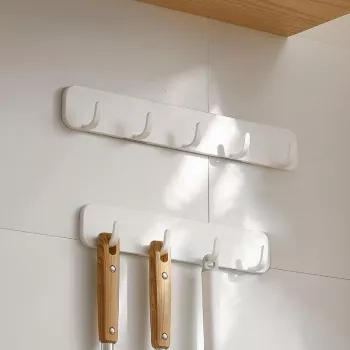
If you want a simple, drill-free way to add hanging space in minutes, Traceless Wall-Mounted Storage Hooks are a practical fit for entryways, bathrooms, kitchens, closets, and work areas. For best results, focus on the basics: degrease, dry, press firmly, and wait before loading.
For shoppers also refreshing and maintaining the look of frequently handled surfaces (like car interior trim that collects scuffs and fingerprints), Car Plastic & Leather Restorer – Back to Black Gloss Coating & Polish is another in-stock option to keep on hand.
If clutter is as much about commitments as it is about cords and coats, Not Right Now Doesn’t Mean Never: AI-Powered Checklist can help streamline decision-making and protect your time while you build more organized routines.
They can remove cleanly on smooth, well-cured paint, but they may lift weak, uncured, or peeling paint. Test one hook in an inconspicuous spot and remove it by peeling slowly along the wall rather than pulling outward.
Wait at least several hours, and overnight when possible, so the adhesive can fully bond. Hanging items too soon is one of the most common reasons hooks slide or fall.
Common causes include soap film and skin oils, moisture and steam, placement on grout or textured walls, and loading before the set time. Clean with isopropyl alcohol, choose a smoother/drier spot, and let the hook set fully before use.






Leave a comment